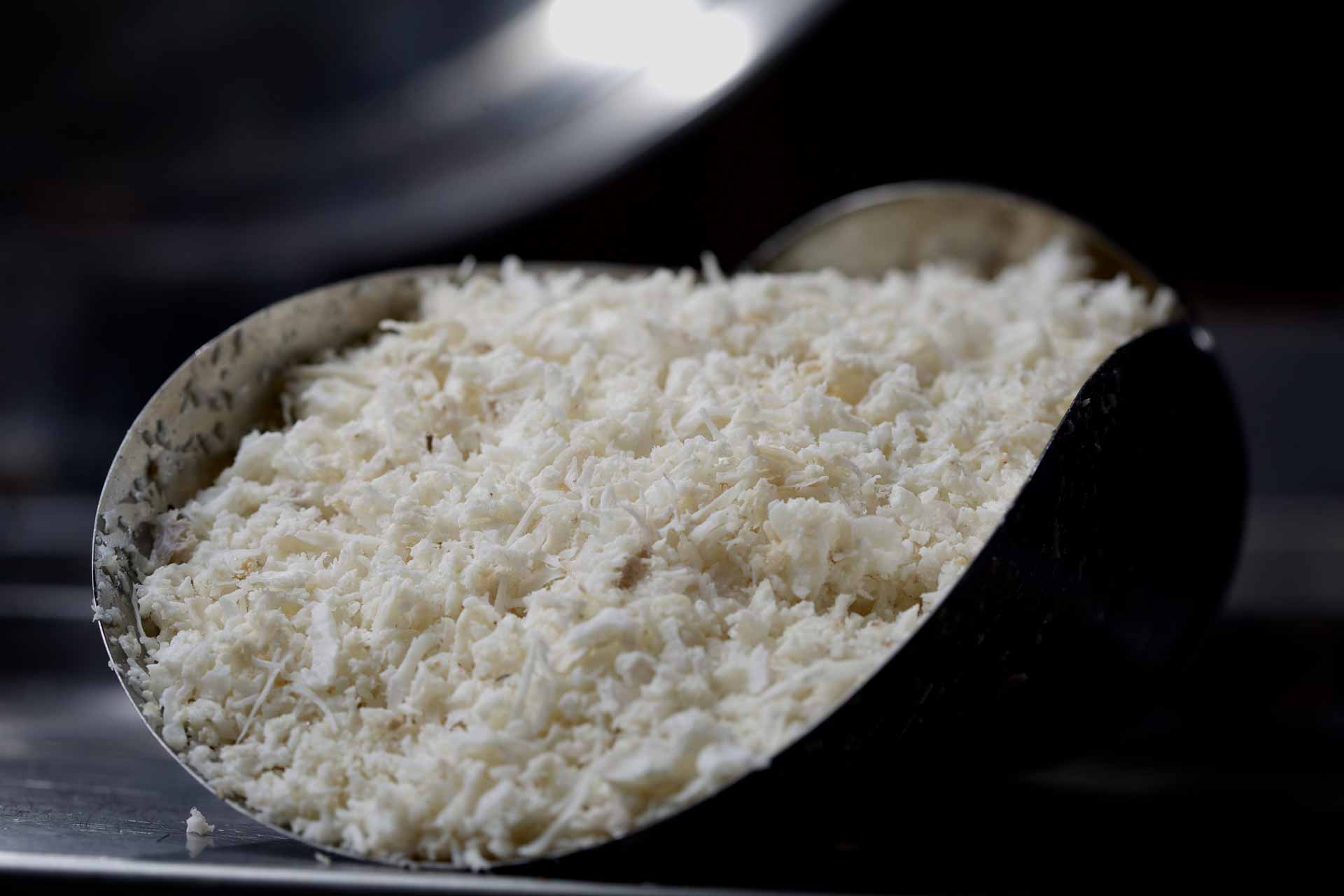
Birthe Vang, pictured here with cod milt, was the project leader for the research led by Nofima in collaboration with Nord-Senja Fisk, NUAS Technology and NTNU.
Photo: Rune Stoltz Bertinussen, Nofima
A new research report from Nofima shows that cod milt could become a valuable new resource for the seafood industry. However, unlocking its potential will require significant investments in technology and production capacity.
Each year, large volumes of residual raw materials are generated by Norway’s whitefish industry. More than half of this material currently goes to silage – a process where the raw material is ground and preserved with acid before being used in feed or biogas production. Cod milt is one of the resources that typically ends up in this stream.
The project TOPP (Cod Milt – Oil and Protein Processing), funded by FHF – Norwegian Seafood Research Fund, demonstrates that enzymatic hydrolysis can transform cod milt into high-value ingredients for human consumption. However, implementing this technology in the industry remains challenging.
Flexible production solutions
The technology tested in the project is considered suitable for both stationary and mobile production systems.
Mobile production units
Trials have been conducted using container-based facilities that can be moved quickly to landing sites with smaller volumes of raw material. This allows processing of completely fresh raw material in locations where large permanent plants would not be economically viable.
Stationary facilities
Local production at fish landing sites allows continuous processing during the three- to four-month cod season. This reduces the need for freezing capacity and lowers costs associated with freezing and thawing raw materials.
Lowering the threshold for adoption
For a typical fish landing facility, producing hydrolysates locally would require substantial investments in both equipment and expertise. The report therefore proposes two possible approaches to reduce risk:
Contract production
Companies can test production in existing facilities, such as the Biotep plant in Kaldfjord outside Tromsø. This provides access to expertise and allows companies to scale production without major initial investments.
Industry collaboration
The project itself was carried out through collaboration between research institutions and industry partners including Nord-Senja Fisk, demonstrating that the technology can be implemented in real seafood processing operations.
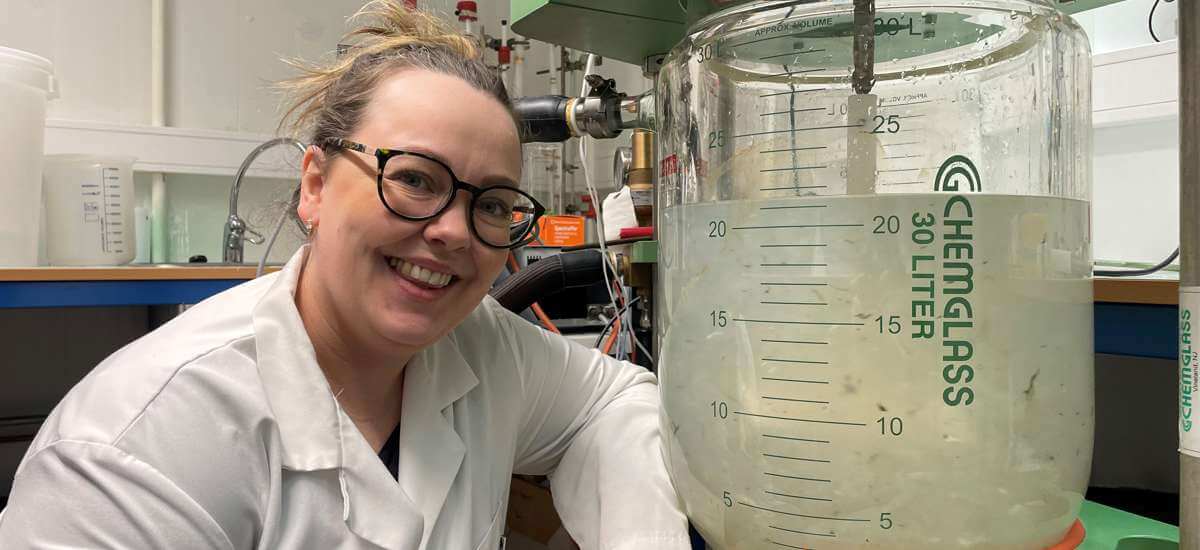
Marte Jenssen, researcher at Nofima, worked on the project funded by FHF. Photo: Anne-May Johansen, Nofima
Technical challenges remain
Although scaling up to industrial production is technically feasible, the report identifies several practical challenges:
-
Processing limitations: A high phospholipid content makes it difficult to separate pure oil.
-
Viscosity issues: During evaporation, the material can become very thick, potentially causing circulation problems in processing systems.
-
Logistics: Using external facilities can add costs for packaging, transport and frozen storage.
Despite these challenges, the project provides a solid decision-making basis for companies considering a shift from traditional silage production to higher-value products.
A nutrient-rich resource with health potential
The research results show that cod milt – also known locally as isselje – is extremely rich in proteins, DNA and phospholipids. Using enzymatic hydrolysis, researchers were able to break down proteins into smaller, water-soluble peptides and isolate valuable components.
Project leader Birthe Vang at Nofima describes cod milt as a nutritional powerhouse. The study detected clear bioactivity, including antioxidant effects and inhibition of the enzyme DPP-4, which is linked to blood sugar regulation.
This could open opportunities in global markets for food ingredients and dietary supplements. In particular, marine DNA (PDRN) is highly valued in the medical and cosmetics industries, where it is used in applications ranging from wound healing to skincare.
Project facts
The TOPP project (901884) is a collaboration between Nofima, NTNU, Nord-Senja Fisk, Biotep and NUAS Technology. The project focused on developing and optimising processes for producing marine proteins and oils from cod milt.
Today, around 43% of internal organs from offshore fishing vessels are utilised, while the coastal fleet already utilises almost everything.
Whitefish viscera contain high levels of nutrients including proteins, healthy fats and essential vitamins. These resources can be used for food ingredients, dietary supplements, biomedical products and cosmetics.
New knowledge and technology can increase utilisation, but challenges related to market development, regulation and industry attitudes still complicate the commercialisation of products based on fish viscera.
The long-term goal is for as much residual raw material as possible to be used in products for human consumption — creating higher value, healthier products and less waste.
Read the original story here here: (only in norwegian)
FHF.no | Fra fiskeslo til helsekost: Torskemelke kan bli gullgruve, men krever investeringer