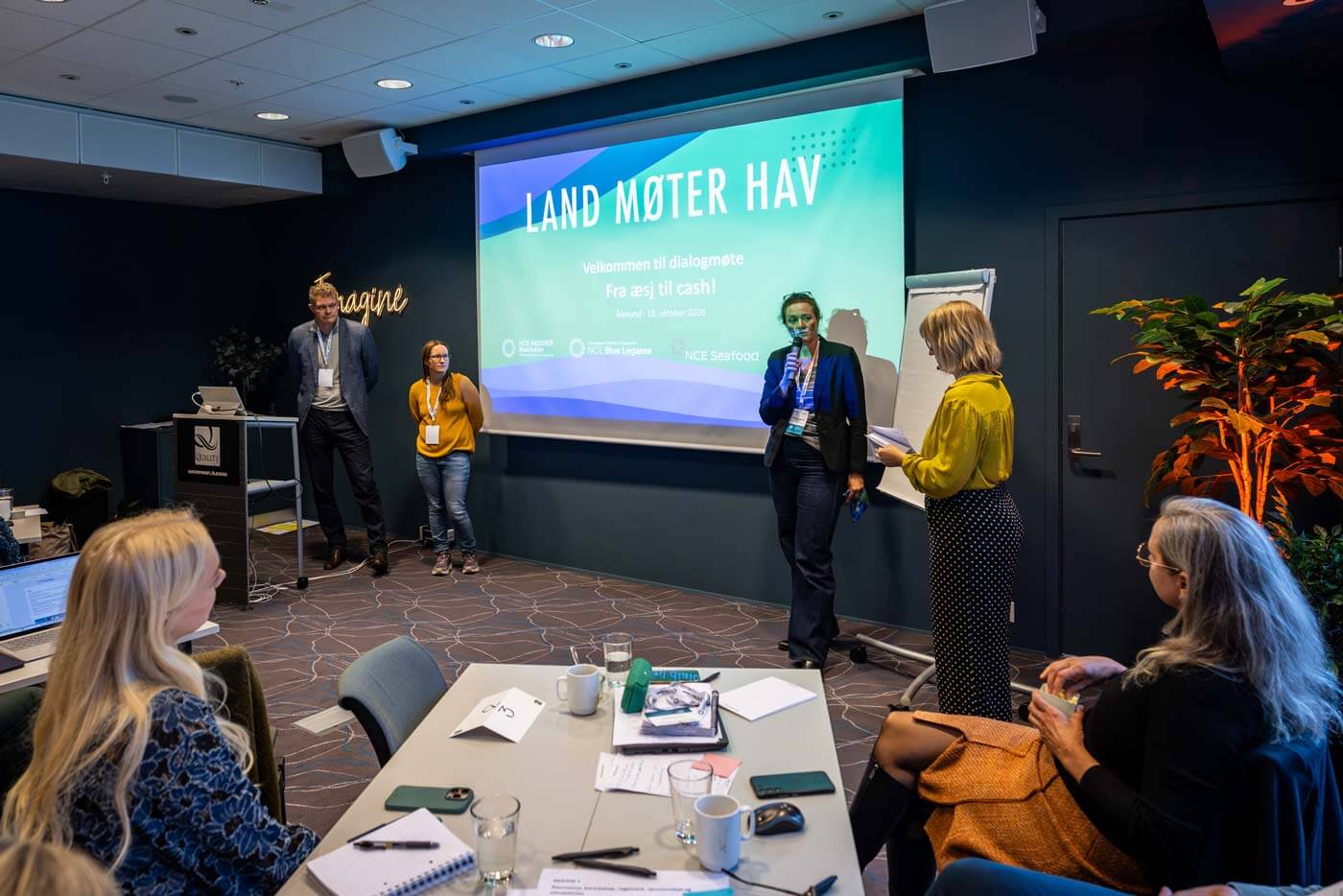
Around 60 representatives from Norway’s marine and agricultural sectors gathered in Ålesund to explore how residual raw materials can create new value. The message was clear: The resources and technology exist, but stronger collaboration is needed to turn opportunities into industrial solutions.
Norway’s marine and agricultural industries generate significant volumes of residual raw materials with potential for new food products, feed ingredients and other high-value applications. Yet much of this potential remains untapped.
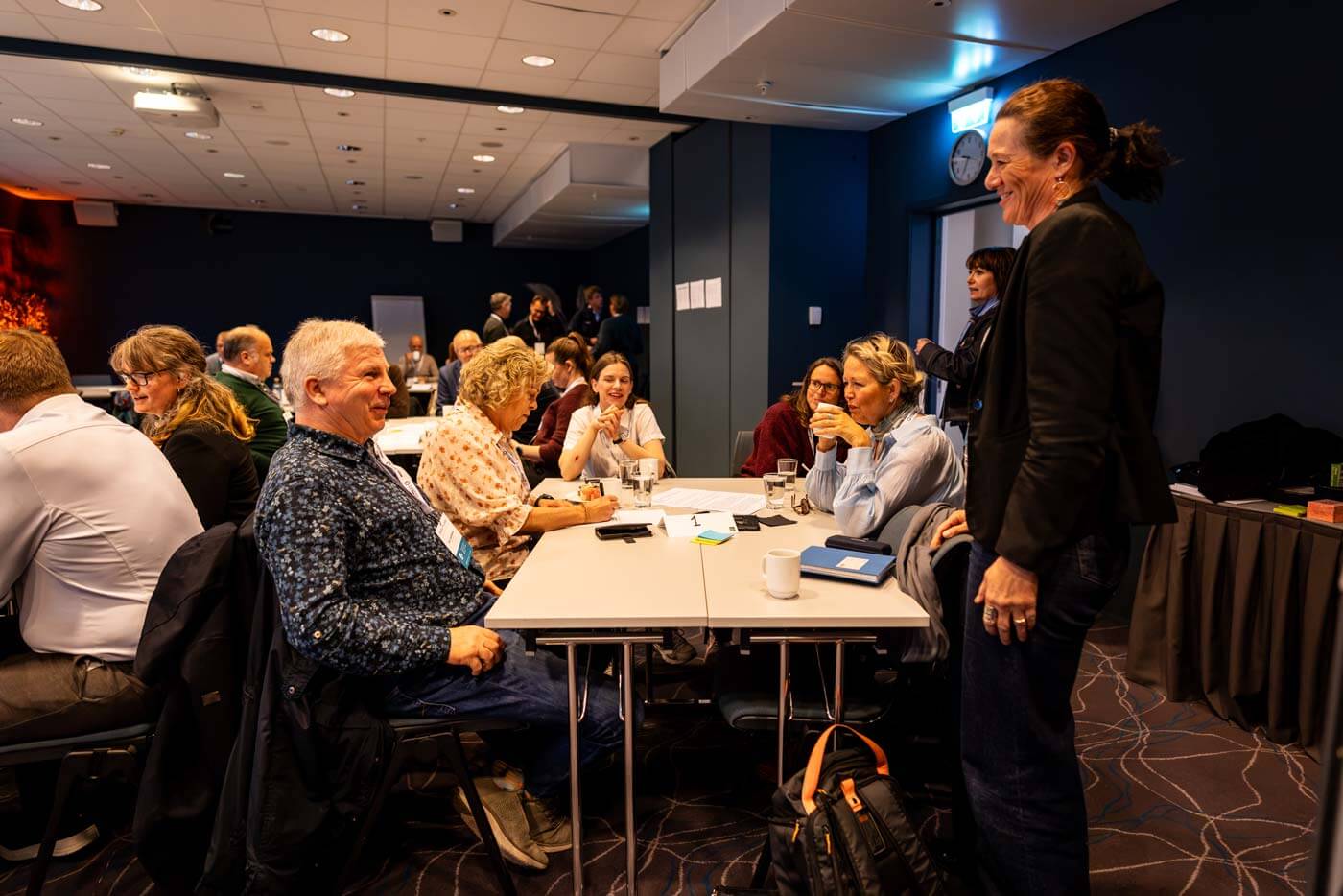
To address these opportunities, the four industry clusters behind Land Meets Sea (Land møter Hav) brought together around 60 participants from industry, research and public organisations for a dialogue meeting in Ålesund.
The discussions highlighted a common challenge: Norway already has much of the raw material, knowledge, technology and infrastructure needed. What is missing is better coordination, clearer priorities and support for scaling promising solutions.
Breaking down regulatory barriers
Regulations governing animal by-products were identified as a major obstacle to developing new value chains across both sectors.
Participants called for a more coordinated approach to regulatory challenges, including joint scientific documentation and stronger engagement with Norwegian and European authorities.
The discussions also highlighted the importance of making better use of existing resources rather than simply increasing raw material volumes.
Bridging the gap from pilot to industry
Anne Marte Vestre Berge / ÅKP
One of the strongest messages from the meeting was the need for better access to processing technology, testing facilities and industrial-scale production.
Presentations from FlexBio and Biotep demonstrated how new processing technologies can transform residual raw materials into valuable ingredients and products.
However, many promising innovations struggle to move beyond the pilot stage. Participants emphasised the need for financing that supports both industrial scaling and market development.
Existing infrastructure, such as Biotep in Northern Norway, already provides valuable opportunities for testing and development. Making these facilities more accessible and visible could help companies reduce risk and accelerate commercialisation.
Technology alone is not enough
The meeting also explored how consumers perceive new food and feed ingredients.
Research presented during the event showed that using poultry meal in salmon feed did not negatively affect the fish’s appearance, smell or taste. Nevertheless, consumer surveys in France and the United Kingdom revealed considerable scepticism towards poultry-based feed ingredients.
The findings underline an important point: Scientific evidence and technical performance do not automatically translate into market acceptance.
Successful commercialisation requires consumer trust, transparent communication and a better understanding of different markets.
Anne Marte Vestre Berge / ÅKP
Building stronger value chains together
Across the discussions, participants identified several shared priorities: mapping available raw materials, improving access to processing infrastructure, addressing regulatory barriers and developing stronger markets for new products.
Rather than spreading resources across numerous small initiatives, the meeting encouraged greater focus on promising opportunities with genuine industrial potential.
For Biotech North, the discussions reinforce the importance of connecting biotechnology expertise, research infrastructure and industry partners across sectors.
About Land Meets Sea
Land Meets Sea (Land møter Hav) is a collaboration between four Norwegian industry clusters: NCE Seafood, NCE Blue Legasea, NCE Heidner Biocluster and Biotech North.
The initiative aims to strengthen Norway’s bioeconomy by connecting the marine and agricultural sectors, promoting circular resource utilisation and supporting sustainable industrial innovation.
By working across traditional industry boundaries, the clusters seek to create new value chains, reduce environmental impact and unlock more value from Norway’s biological resources.